Anyone with Parkinson’s, or who wishes to reduce their risk of contracting the ailment, can take these critical steps:
- Respond to a free and confidential Parkinson’s Trichloroethylene Exposure Questionnaire.
- Become a signatory to our Coalition Letter requesting that Governor Hochul help prevent Parkinson’s disease in New York by remediating all Trichloroethylene (TCE) environmental health hazards.
- Find out if you live on or near documented Trichloroethylene sites that could cause or contribute to Parkinson’s risk.
- Watch a video: Home of a woman with Parkinson’s in Ithaca, NY has Trichloroethylene in indoor air 6X the NYS guideline.
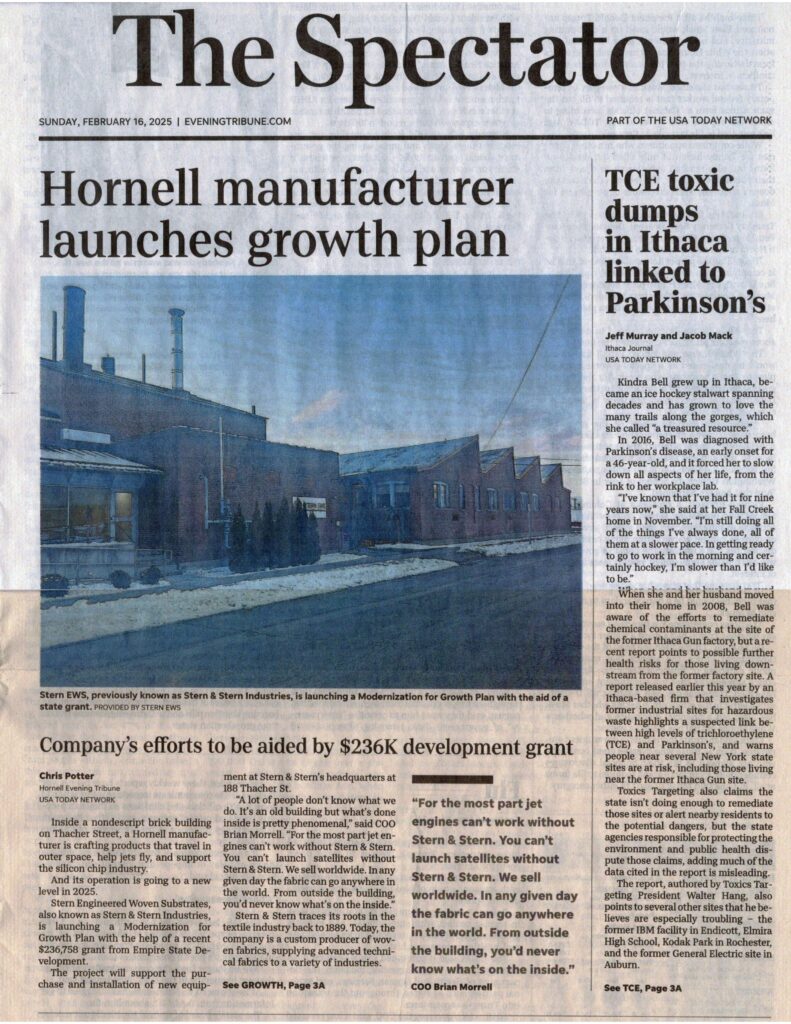
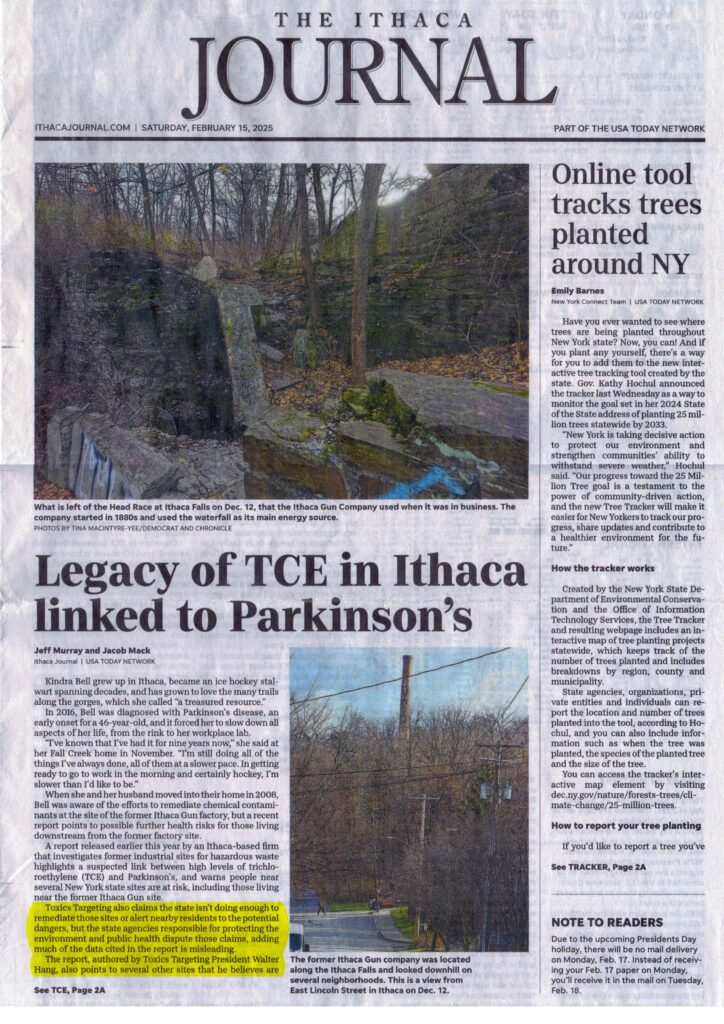
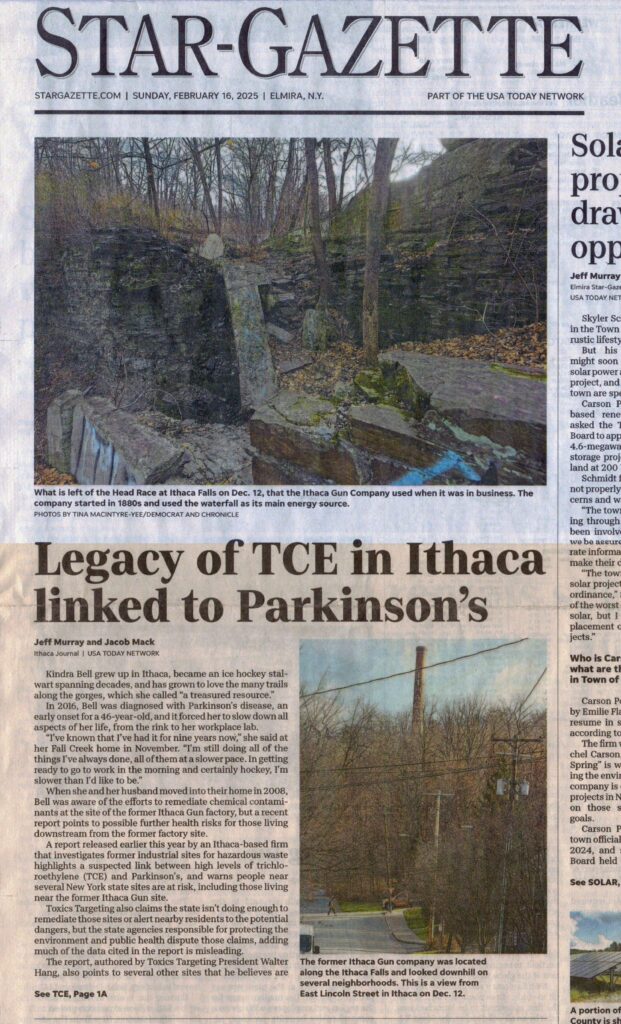
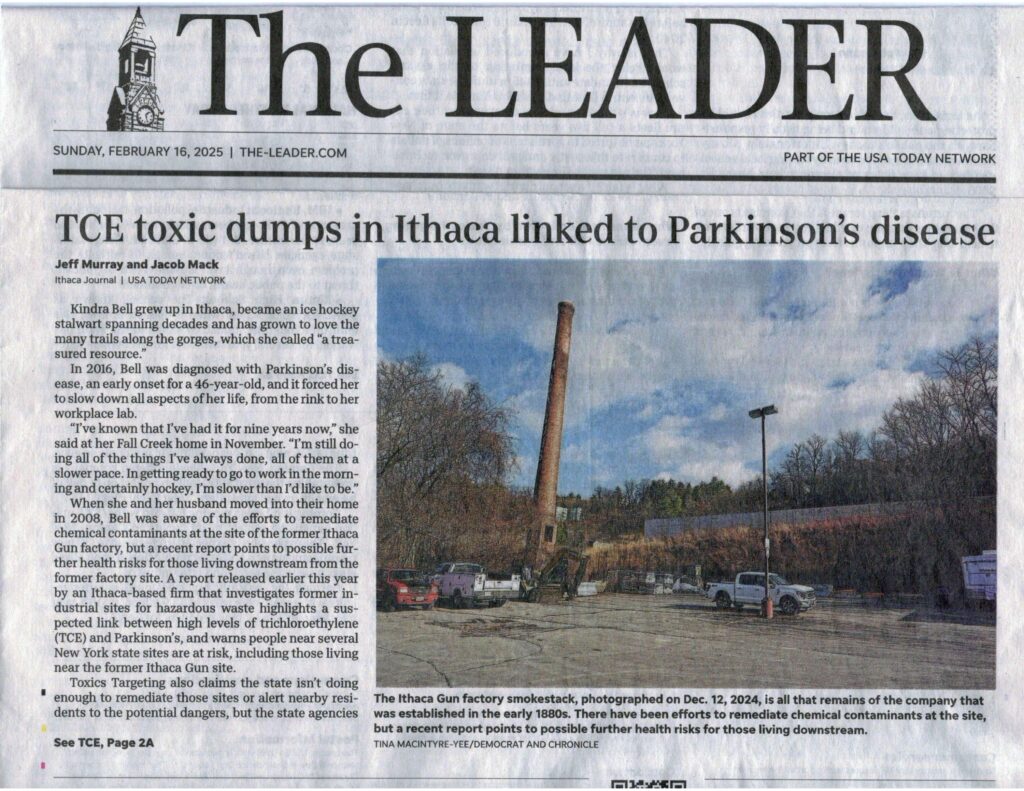
- Learn about Trichloroethylene contamination that polluted homes near the Ithaca Gun site in Ithaca, NY.
- Learn about Trichloroethylene contamination on and around a former IBM factory in Endicott, NY that threatens more than 500 homes and buildings with soil vapor intrusion over a 250-acre area.
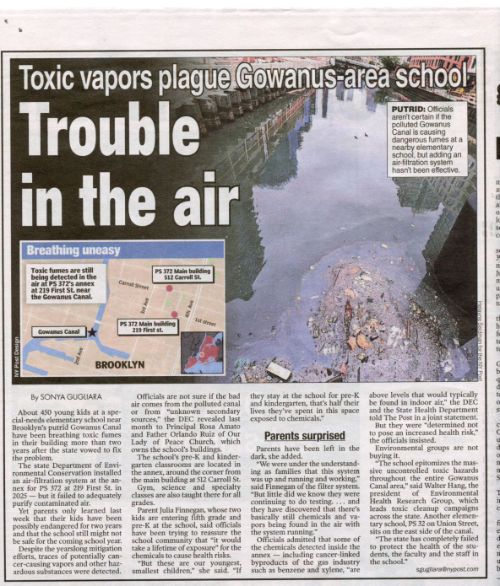
- Learn about massive Trichloroethylene contamination in Brooklyn’s Gowanus Canal community.
- Write to Governor Hochul: personalized request for soil vapor intrusion testing of my home and comprehensive cleanup of toxic sites.
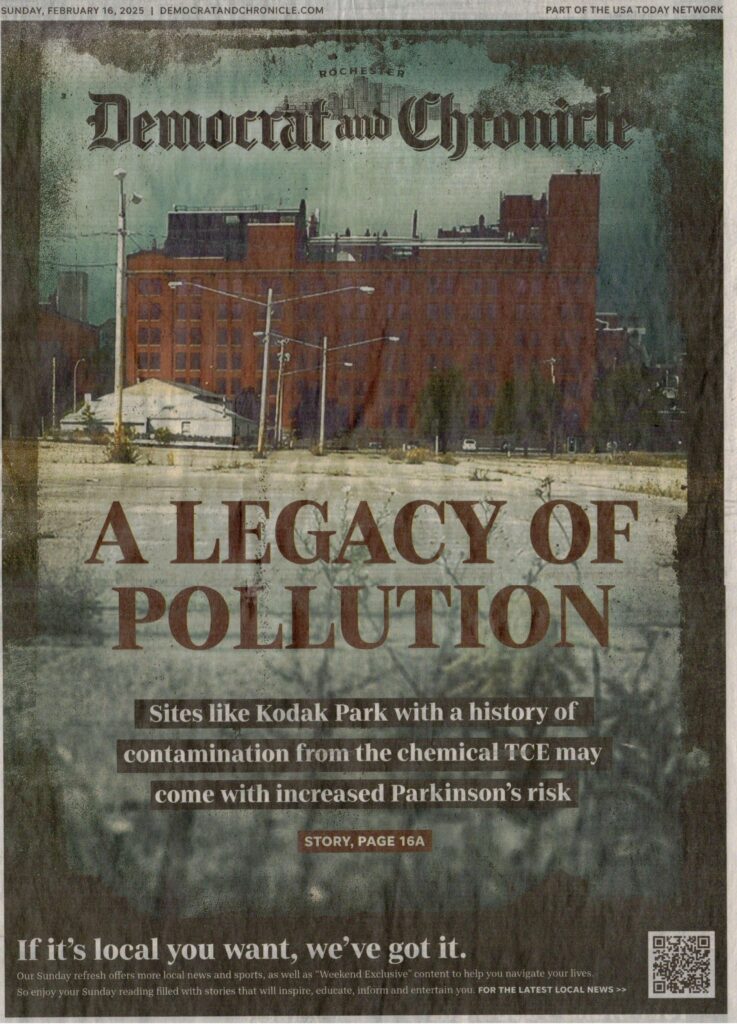
- Watch a video: Dan Kinel in Rochester, NY believes Trichloroethylene exposure caused his Parkinson’s.
Press Coverage & Documents








What is Parkinson’s?
Parkinson’s disease is an incurable ailment that can cause debilitating physical problems, including tremors and loss of motor skills, balance and coordination that can lead to severe movement impairment. Parkinson’s can also cause mental health disorders that intensify over time.
Parkinson’s is the fastest growing neurodegenerative ailment in America. Nationwide, more than one million Americans are afflicted with Parkinson’s, and nearly 90,000 people are diagnosed each year.
Even though billions of dollars have been invested in Parkinson’s research, there is no cure. That is why it is imperative to help people avoid contracting the disease if at all possible. That is the goal of the New York Parkinson’s Prevention Campaign.
Avoid Exposure to Trichloroethylene That Can Reportedly Increase Parkinson’s Risk by Up to 500%
Parkinson’s was long thought to be idiopathic, or associated with unknown causes, but statistically significant epidemiological health investigations document that a widespread neurotoxic contaminant called Trichloroethylene (TCE) is causally associated with increasing Parkinson’s risk by up to 500%.
What is Trichloroethylene?
For more than a century TCE was widely used as a degreasing agent, a chemical intermediate, an ingredient in hundreds of consumer and industrial products, and a dry cleaning solvent and spot remover. TCE is nearly ubiquitous in developed communities as an air, land and water pollutant because it resists degradation. It has been detected in drinking water all over New York and from coast to coast. Millions of New Yorkers were also exposed to TCE in workplace settings before the chemical was prohibited in our state in 2021.
Read more about the U.S. Environmental Protection Agency’s TCE industry classifications.
New York’s Growing Parkinson’s Crisis
In the last 20 years, Parkinson’s took the lives of more than 21,000 New Yorkers. Each year, nearly 2,000 New Yorkers are diagnosed with the ailment. Uncontrolled public exposures to TCE involving millions of New Yorkers very likely play a role in causing or contributing to our state’s growing Parkinson’s crisis.
New York State map: Parkinson’s disease mortality rates, 1999-2020 (PDF).
Massive Trichloroethylene Contamination in Brooklyn’s Gowanus Canal Area
New York’s legacy of TCE hazards is starkly illustrated by the infamous Gowanus Canal in Brooklyn, NY. Over the last century, hundreds of industrial, utility and manufacturing sites released TCE and “black mayonnaise” coal tar into the canal. The U.S. Environmental Protection Agency is currently removing nearly 600,000 cubic yards of contamination at a cost of $1.5 billion.
Hundreds of thousands of residents have been exposed to TCE and other toxic pollutants for decades due to government’s failure to safeguard public health. Massive proposed redevelopment of the area will result in even larger numbers of people living on or near TCE sites. Read more about TCE contamination at Brooklyn’s Gowanus Canal.
The Solution
Preventing Parkinson’s can be achieved, in part, by eliminating exposures to Trichloroethylene in indoor air, outdoor ambient air, drinking water and all environmental settings. Advocacy efforts are underway to require a moratorium on all State Brownfield approvals until New York’s toxic site cleanup requirements are strictly enforced.
- Request that Assembly Environmental Conservation Committee Chair Glick impose a moratorium on new State Brownfield approvals.
- Request that Senate Environmental Conservation Committee Chair Harckham impose a moratorium on new State Brownfield approvals.
Conclusion
People who have Parkinson’s that might be associated with TCE hazards have legal options as well as opportunities to take advocacy and organizing action to safeguard their health. If you have questions, please call 800 2 TOXICS (800 286 9427).